Tag: Reliability

  • Top 5 Pickup Trucks for Small Business Owners

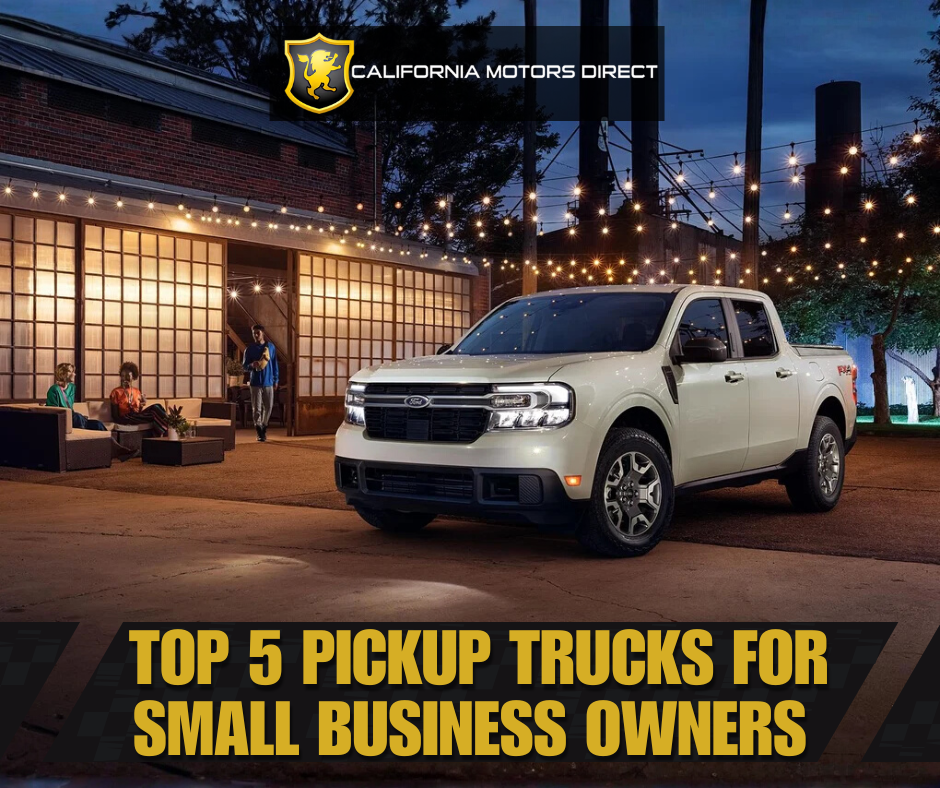
    Blog title page with a white ford truck under strings of lights and 3 people sitting near the warehouse

    If you’re a contractor or small business owner in Southern California, your truck isn’t just a way to get from job to job. It’s your rolling toolbox, mobile office, and often your biggest business asset after your tools and equipment.

    With used truck prices still high and California’s regulations tightening, picking the right used pickup matters more than ever.

    Before choosing a brand or badge, focus on what the truck has to do every single week in SoCal conditions.

    Key Things to Consider:

    1. Payload (what you carry):

    Tools, lumber, tile, compressors, ladders, pipe, generators, racks—weight adds up quickly.

    • Light trades: look for at least ~1,200–1,500 lbs of payload.
    • Heavy trades (concrete, framing, hardscaping, larger trailers): aim for 2,000+ lbs.

    2. Towing (what you pull):

    • Small utility/landscape trailer: ~3,500–5,000 lbs
    • Enclosed tool trailer or small skid steer: ~5,000–8,000 lbs
    • Larger equipment / heavy trailers: 10,000+ lbs

    3. Urban Maneuverability:

    • Working in downtown LA, Santa Ana, Anaheim, or Long Beach—where parking can be tight—a midsize SUV or a shorter-wheelbase full-size vehicle may be a better fit.
    • In the Inland Empire and OC suburbs, where there’s more space, full-size or heavy-duty vehicles are much more compatible.

    4. Fuel & Reliability:

    Traffic is brutal. You want something that won’t live at the pump or in the shop.

    Before you fall in love with a cheap heavy-duty diesel, you need to know what California allows—and what it doesn’t.

    • CARB Truck & Bus Regulation: Heavy-duty diesel vehicles over 14,000 lb GVWR must meet strict emissions rules. Non-compliant older diesels can’t be registered with DMV as of 2020.
    • Gas & under-14k GVWR trucks: Currently exempt from that specific CARB Truck & Bus rule.

    For most small contractors and businesses, staying with light-duty pickups (half-ton, ¾-ton gas, 1-ton gas) is simpler and avoids most of that headache.

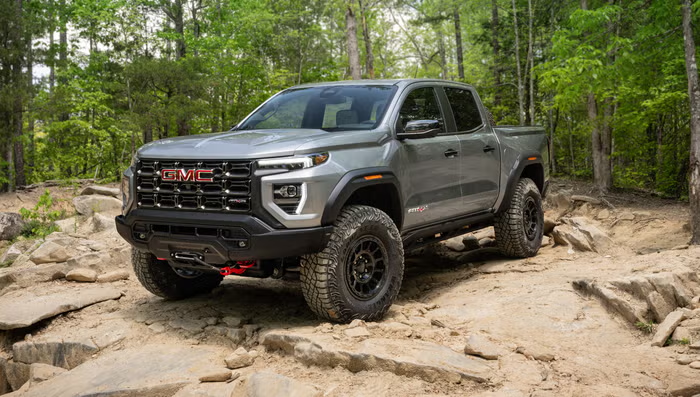
    a grey GMC midsize truck parking in a forest
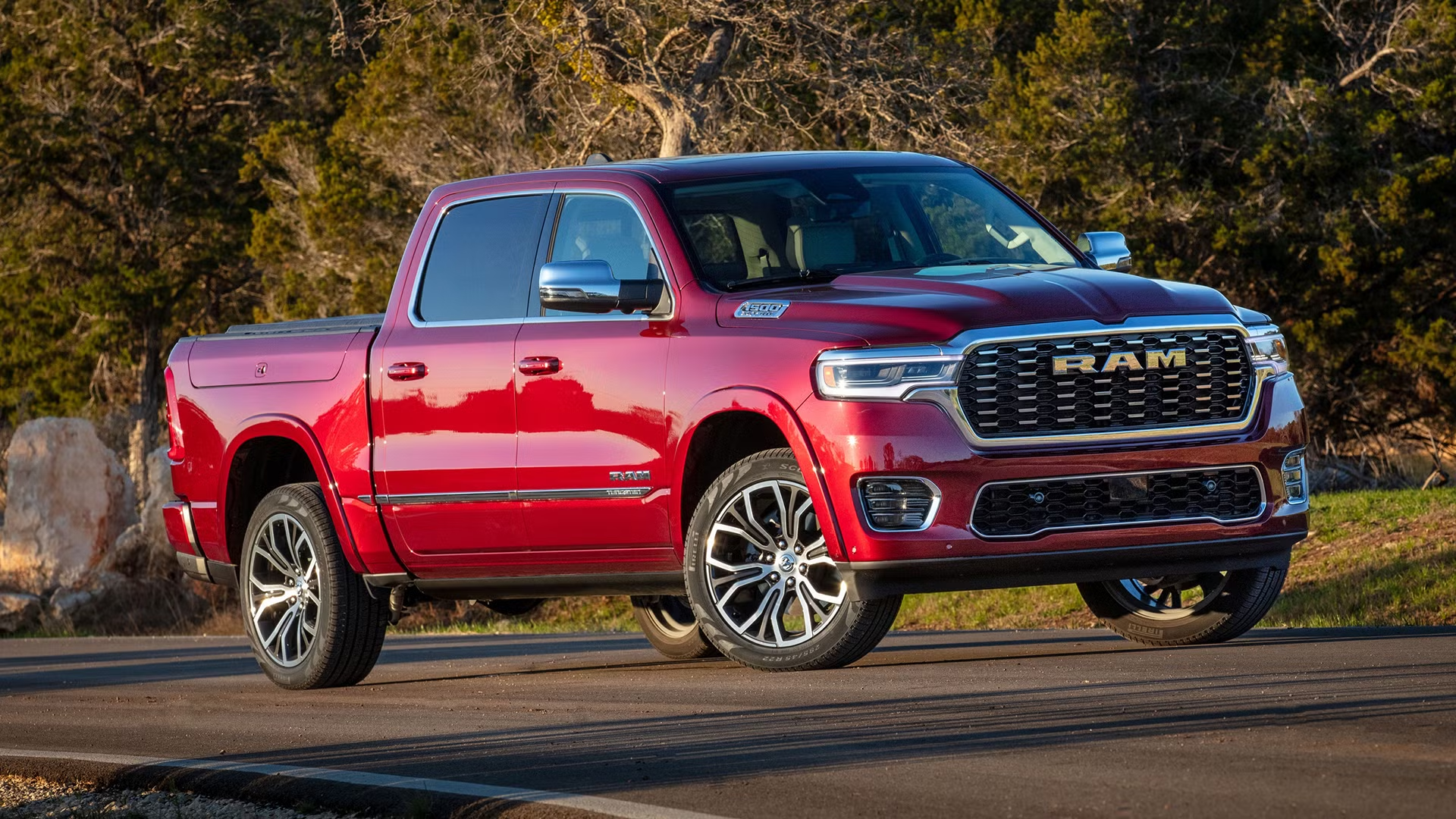
    a red RAM half-ton truck parking on a mountain road with sun shining down from above
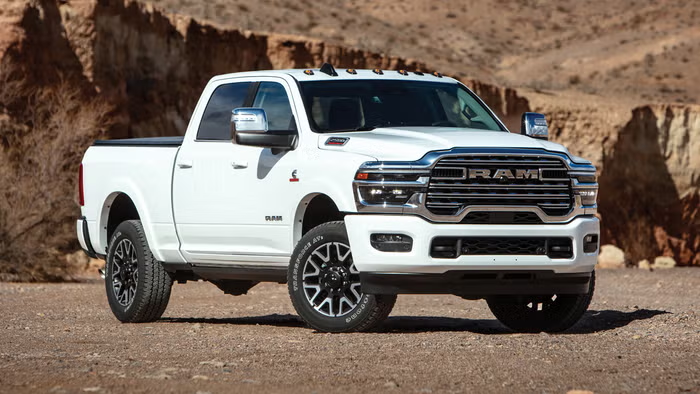
    a red white RAM heavy-duty truck parking in the desert

    Best for: Light-duty work, mobile services, tight city areas.

    • Easier to park in LA/OC traffic and neighborhoods.
    • Better fuel economy.
    • Lower ownership cost.

    Best for: Most contractors and small businesses.

    • Strong towing (8,000–13,000 lbs).
    • Higher payload for lumber, tools, and equipment.
    • Bigger beds (6.5–8 ft) for materials.
    • Comfortabledaily driving + crew transport.

    Best for: Businesses towing heavy equipment or large trailers every day.

    • Maximum towing (12,000–20,000+ lbs depending on configuration).
    • Stronger frames, brakes, and suspensions.
    • Handles heavy pallets, machinery, and multi-axle trailers.

    Limitations:

    • Not ideal for heavy materials.
    • Lower towing capacity (approx. 3,500–6,800 lbs).

    Limitations:

    • Fuel cost is higher than midsize.
    • Specs vary a lot by engine/axle; you must check payload/tow ratings for the specific truck.

    Limitations:

    • Higher fuel and maintenance cost.
    • Large size can be difficult in busy SoCal cities.
    • Overkill for light and medium-duty trades.

    Below are practical, work-focused picks—not just “nice to have” trucks, but models that make sense in SoCal’s real-world conditions.

    1. FORD F-150 (2015-2020): The All-Around Workhorse

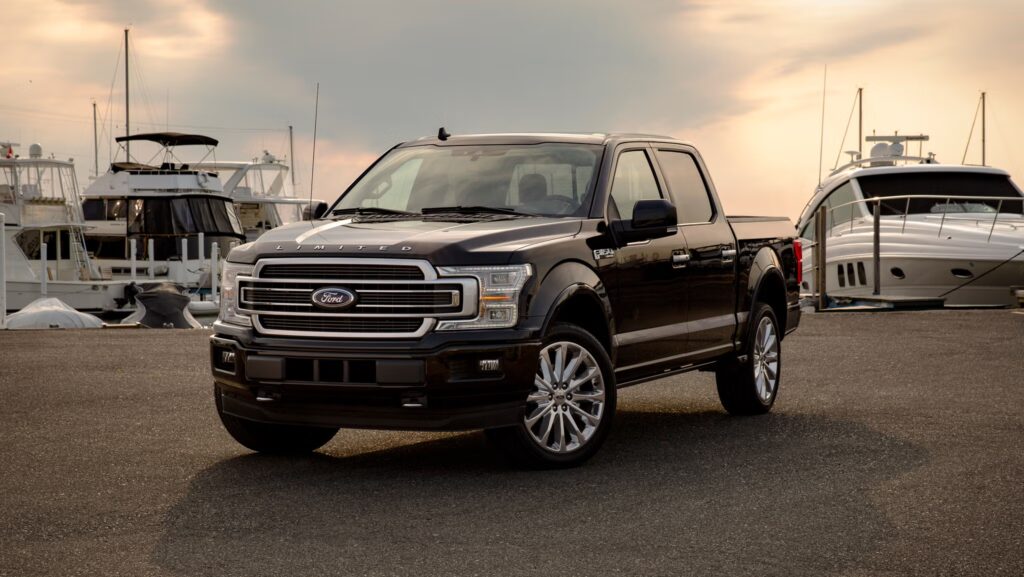
    a black 2020 Ford F-150 parking near a dock with boats behind

    The Ford F-150 is the best-selling truck in the U.S. for a reason. For contractors, it delivers a sweet spot between capability, comfort, and availability on the used market. If you want “one truck that can do almost everything” in SoCal, a carefully chosen used F-150 is hard to beat.

    Ford’s 13th-gen F-150 (2015–2020) is especially strong:

    • Max towing: up to about 13,200 lbs when properly equipped (3.5L EcoBoost + Max Trailer Tow).
    • Max payload: up to about 3,270 lbs in specific regular-cab, HD Payload Package configurations.
    • Aluminum body (2015+) helps resist rust—a plus for coastal SoCal.

    Why it works for contractors & small businesses:

    The F-150 gives you flexibility. It can be spec’d as a bare-bones work truck or a crew-cab mobile office. There’s a huge used supply in SoCal, so you can shop around for the right combo of bed length, cab, and engine.

    What to watch out for:

    Payload varies widely; a nicely optioned 4×4 crew cab may only have ~1,500–1,800 lbs of payload. Always check the tire & loading sticker in the door jamb for the exact payload rating.

    2. TOYOTA TUNDRA (2014-2021): Long-Term Reliability King

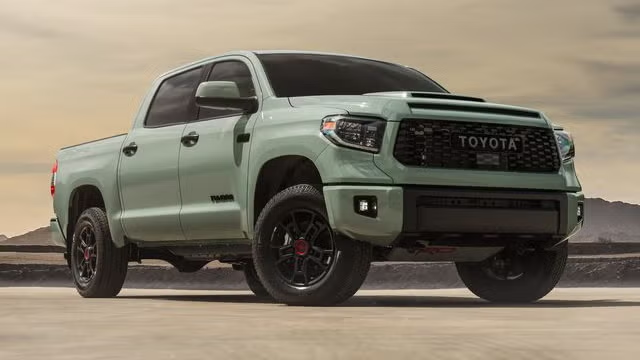
    a mint 2021 Toyota Tundra in driving in the desert

    If your priority is “buy it, maintain it, and keep it forever”, the Toyota Tundra is hard to beat.

    • Max tow rating: up to around 10,500 lbs depending on configuration.
    • Even lower-spec Tundras can usually tow 6,800+ lbs—plenty for many trailers.
    • Strong resale value thanks to Toyota’s reputation

    Why it works for contractors & small businesses:

    Many Tundras routinely reach 150,000–250,000 miles, with plenty surpassing 300,000 miles when properly maintained—an important advantage for businesses that prioritize reliability over fuel economy. The Tundra is widely regarded as one of the most dependable half-ton trucks on the market. Its simple, proven 5.7L V8 further enhances long-term durability, offering far less complexity than many turbocharged competitors.

    What to watch out for:

    Fuel economy remains a weakness, and operating costs will generally be higher than those of an F-150 EcoBoost or Silverado V6.

    3. TOYOTA TACOMA (2016-2023): Small Business Hero

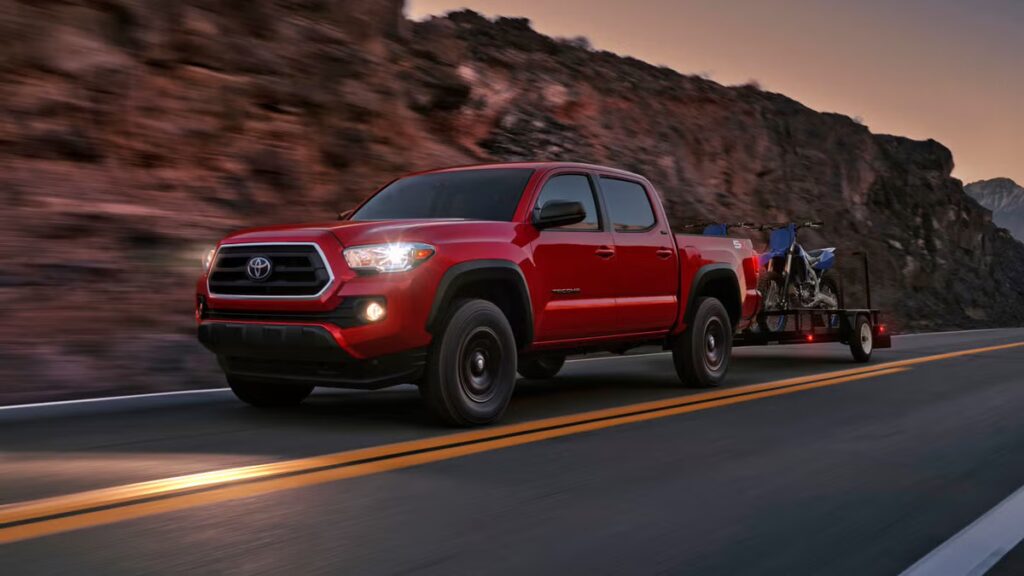
    a red 2023 Toyota Tacoma driving near a mountain pulling two bikes behind at sunset.

    The Tacoma is the king of midsize trucks, and for many small businesses in SoCal, it’s all the truck they’ll ever need. If your jobs don’t require heavy equipment but you need a dependable, maneuverable work truck, the Tacoma is a strong, low-risk choice.

    • Towing (3rd-gen Tacoma): up to about 6,800 lbs when properly equipped.
    • Payload: up to roughly 1,400–1,440 lbs in the right configuration.
    • Resale value: 2019 Tacoma has won KBB’s Best Midsize Pickup and holds over 80% of its value after 3 years, making it one of the best resale vehicles in the U.S.

    Why it works for contractors & small businesses:

    Tacomas are easier to park, cheaper to fuel than full-size V8s, and insanely popular in SoCal. For mobile services and light trades, they do the job without overkill.

    What to watch out for:

    It’s not the best choice for very heavy loads or big trailers; if you’re frequently pushing payload or towing limits, a full-size truck is the smarter move. Rear-seat space can also be limited in some cab styles, making it less comfortable for crews you transport often.

    4. CHEVROLET SILVERADO 1500 / GMC SIERRA 1500 (2014-2020): Value Full-Size

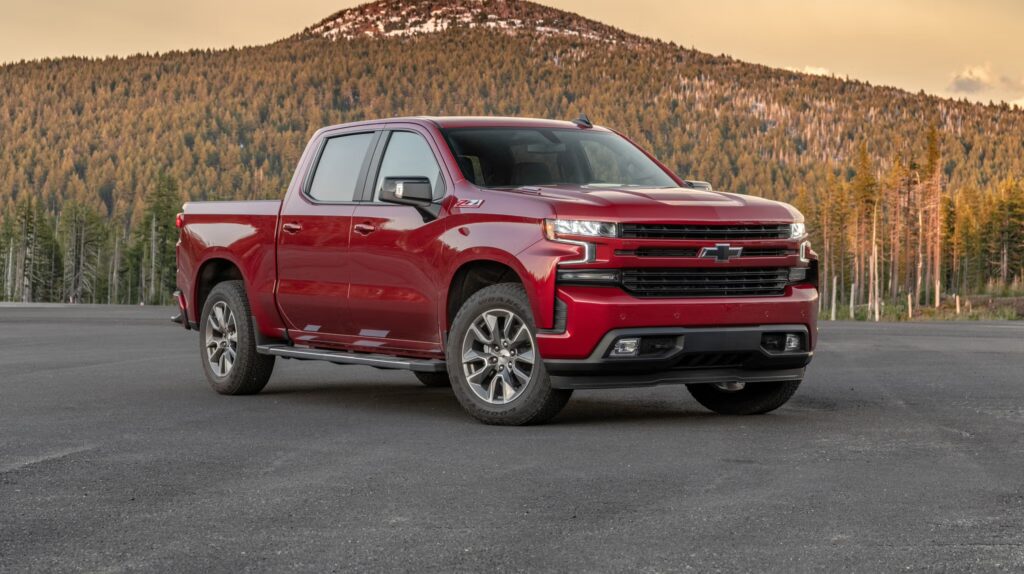
    red 2020 Chevy Silverado 1500 parking in front a a mountain

    The Silverado 1500 and GMC Sierra 1500 are solid full-size options that often cost less on the used market than comparable F-150s or Tundras.

    • Max Payload: up to around 2,250 lbs in the right configuration.
    • Max Towing: with the right engine and Max Trailering Package, certain Sierra/Silverado 1500 models can tow up to 12,500 lbs.

    Why it works for contractors & small businesses:

    These trucks offer full-size capability without the higher prices of Toyota or Ford. The local market has a large supply of used Silverados and Sierras, giving buyers more choices and stronger negotiation power. Their strong V8 options provide dependable towing and hauling for job-site needs, while overall pricing is typically more affordable than rival full-size trucks of similar year and mileage.

    What to watch out for:

    • Some model years, such as 2014 and 2018, are currently under investigation for potential issues and have a higher number of reported recalls.
    • As with any half-ton, check the specific truck’s payload/tow rating—don’t assume.

    5. FORD SUPER DUTY (F-250 / F-350 Gas) & GMC/CHEVY 2500/3500: Heavy-Duty Haulers

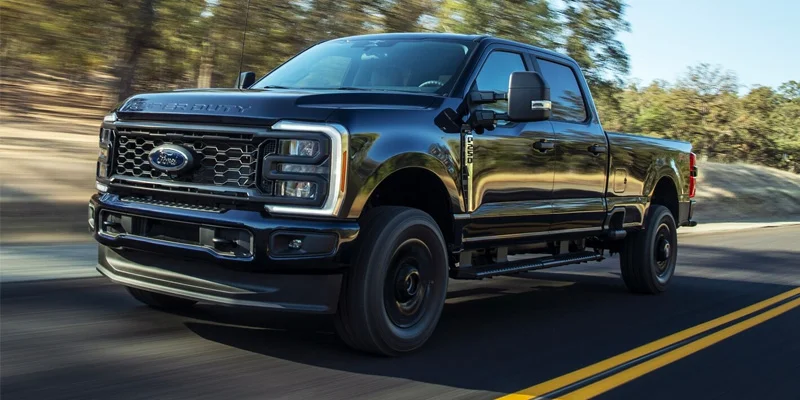
    a black Ford F-350 driving on a road during the afternoon

    If your business regularly tows equipment trailers, dump trailers, or moves seriously heavy materials, you may need to step into the ¾-ton or 1-ton class.

    • A 2500/3500-class truck (e.g., GMC Sierra 2500) can tow up to 18,500–20,000+ lbs and carry payloads around 3,800–4,000 lbs, when properly equipped.
    • Ford Super Duty gas trucks and Chevy/GMC HD gas options are popular with contractors who want big capability without diesel emissions headaches.

    Why it works for contractors & small businesses:

    Heavy-duty trucks are built to handle daily heavy loads and long work hours, making them ideal for concrete and masonry crews, equipment rental and excavation jobs, and landscapers towing big trailers with skid steers or mini-excavators. They offer greater stability and safety when pulling 10,000+ lbs, delivering the durability and confidence small businesses need on every job.

    What to watch out for:

    • Rougher ride when unloaded.
    • Higher fuel and maintenance costs than half-tons.
    • Overkill if you’re mainly just hauling hand tools and light materials.
    • Older diesel HD trucks over 14,000 lb GVWR must comply with CARB’s Truck & Bus regulation—non-compliant trucks can’t be registered.

    MORE: Here are some additional trucks to consider.

    Choosing the right used pickup comes down to understanding your workload and matching it with the truck that can support it. Whether you need the agility of a midsize, the versatility of a half-ton, or the strength of a heavy-duty, the right truck will make your jobs easier and your business more efficient. And when you buy from a trusted dealership, you gain the added confidence of verified inspections, transparent history, and reliable support—so your next work truck is an investment you can depend on every day.

  • Buy Used Hybrid vs EV in Southern California

    title image of blog with kia cars driving on a road

    Southern California is one of the most exciting car markets in the country. With high fuel prices, strict emissions standards, and the state’s transition toward clean energy, many drivers are asking the same question: is a used hybrid or used EV the smarter buy?

    The truth is both options have their advantages, and the right choice depends on how you drive, where you live, and whether you have access to charging. Let’s break it down.

    California’s mix of policies, infrastructure, and lifestyle makes owning an electrified vehicle much more practical than in other states.

    • Fuel Prices: Gas prices are consistently among the highest in the U.S. (often $1.50–$2.00 higher per gallon than the national average). Hybrids and EVs save SoCal drivers thousands annually.
    • Traffic Conditions: Stop-and-go commutes favor hybrids (regenerative braking = better MPG) and EVs (max efficiency in low-speed traffic).
    • Environmental Policies: California enforces strict emissions standards and is phasing out new gasoline car sales by 2035. Used EVs and hybrids will likely retain long-term demand in SoCal as clean transportation becomes mandatory.
    • Charging Growth: California leads the U.S. with more than 178,000 charging ports, and more are added each year.
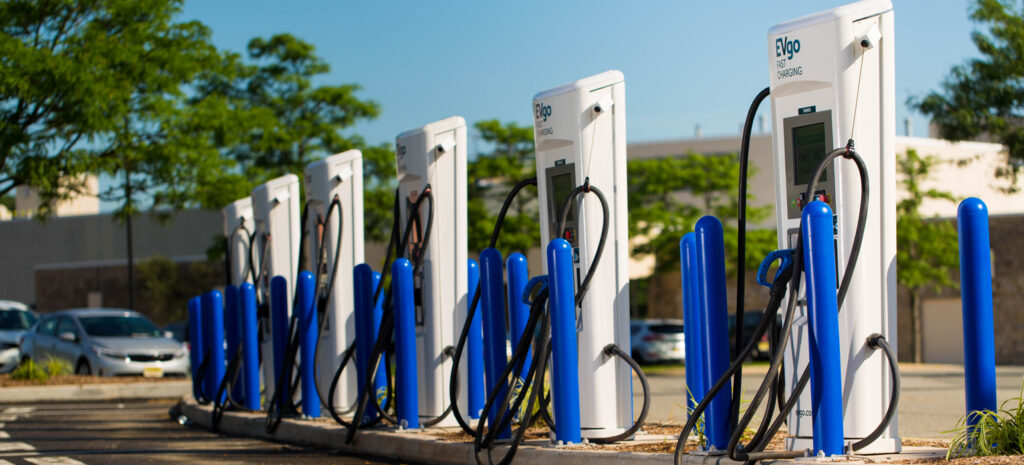
    A row of EV charging stations lined up.

    This means whether you choose a hybrid or an EV, you’ll benefit more in Southern California than in most other regions.

    The financial side is where EVs really shine in SoCal, thanks to stackable incentives.

    Federal Used EV Tax Credit:

    • Up to $4,000 off or qualifying EVs/PHEVs or 30% of the purchase price.
    • Qualifying used EV must be:
      • Purchased from a dealer (not private sale).
      • Priced under $25,000.
      • Model year at least 2 years older than purchase year.
      • Buyer must meet income limits ($75k individual / $150k married).
    • The best part: since 2024, this credit can be transferred to the dealer for an instant discount off the purchase price.

    Southern California Utility Rebate:

    • Southern California Edison (SCE): $1,000 standard rebate; up to $4,000 for income-qualified buyers.
    • LADWP (Los Angeles): Up to $4,000 for qualifying used EVs. In some cases, when stacked with federal credits, buyers report savings of $6,000–$8,000 on a single purchase.

    Replace Your Ride (Income-Qualified Programs):

    • Grants of $7,000–$12,000 to scrap an older vehicle and replace it with a hybrid, PHEV, or EV.
    • Includes additional support like $2,000 for home charging installation.
    • Funds are limited, so these programs open/close based on budgets.

    For EV buyers, these rebates can reduce costs by 30–50%, making used EVs a much stronger financial case.

    💡 Contact us today to learn more about our incentive offers.

    Battery life is the #1 worry for used EV shoppers, but most fears are outdated.

    On average, EV batteries lose only about 1.5–2% of capacity per year. In SoCal’s climate, this means a five-year-old EV may only lose 25–30 miles of range.

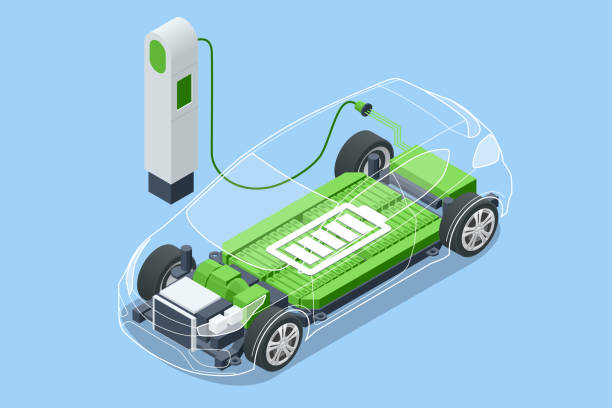
    EV battery and how it is charged

    Warranty and Regulation:

    Warranties provide consumers with peace of mind. Most EVs come with 8-year/100,000-mile battery coverage, while Toyota and Hyundai extend some hybrid and PHEV battery warranties up to 10 years/150,000 miles.

    California’s new rules give EV shoppers more confidence than ever. Beginning with 2026 models, electric vehicles must keep at least 70% of their battery capacity for 10 years or 150,000 miles. Starting in 2030, that standard rises to 80%. In simple terms, newer EVs are built to last longer—and these protections will benefit buyers in the used market too.

    💡 Pro Tip for Buyers: Ask for a battery health report (many EVs track state of health in software), and run a long highway test with A/C on to see real-world range.

    When it comes to dependability, not all powertrains are equal.

    Hybrids: Proven and Predictable

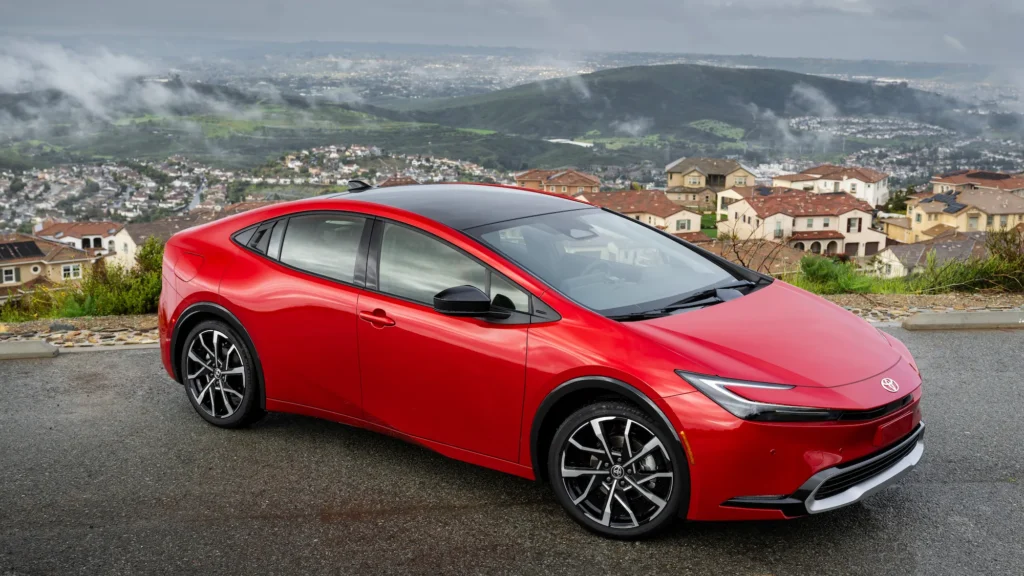
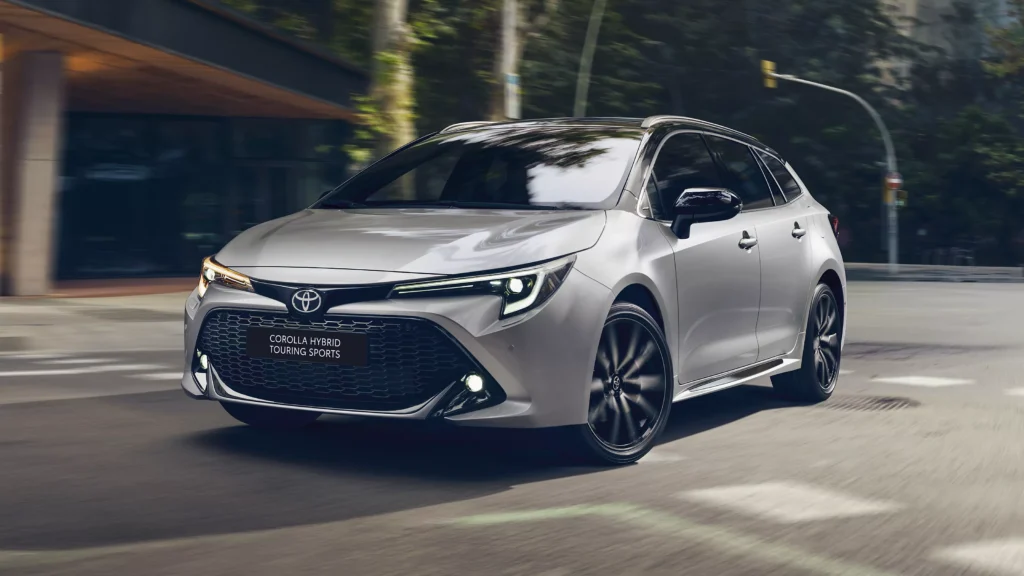
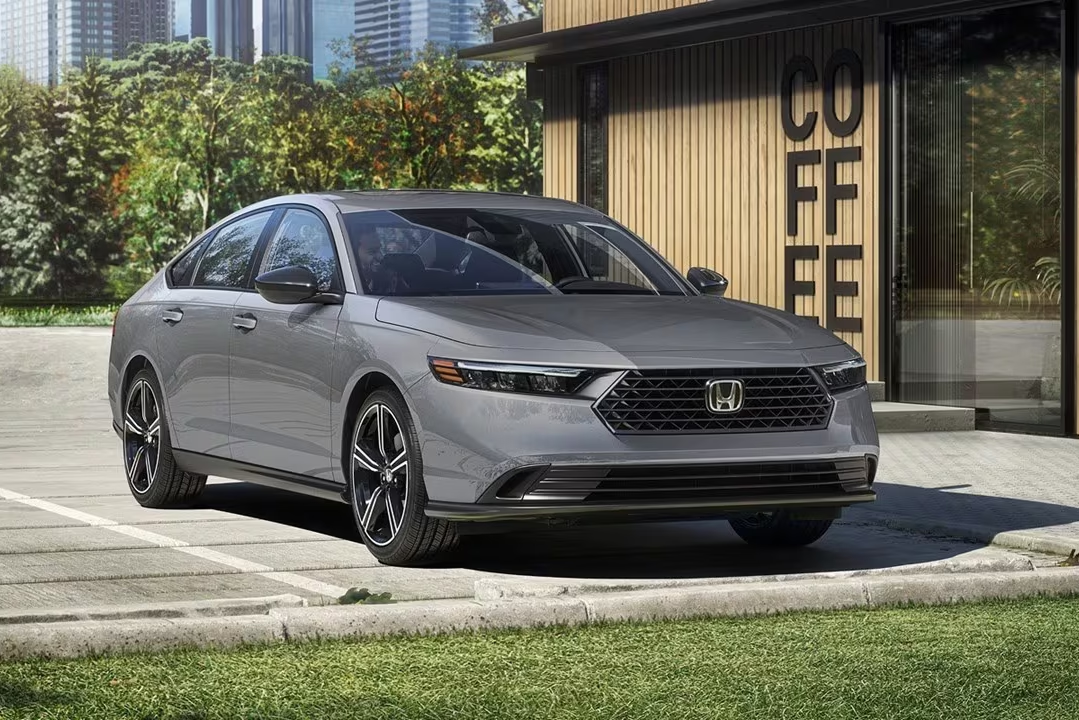
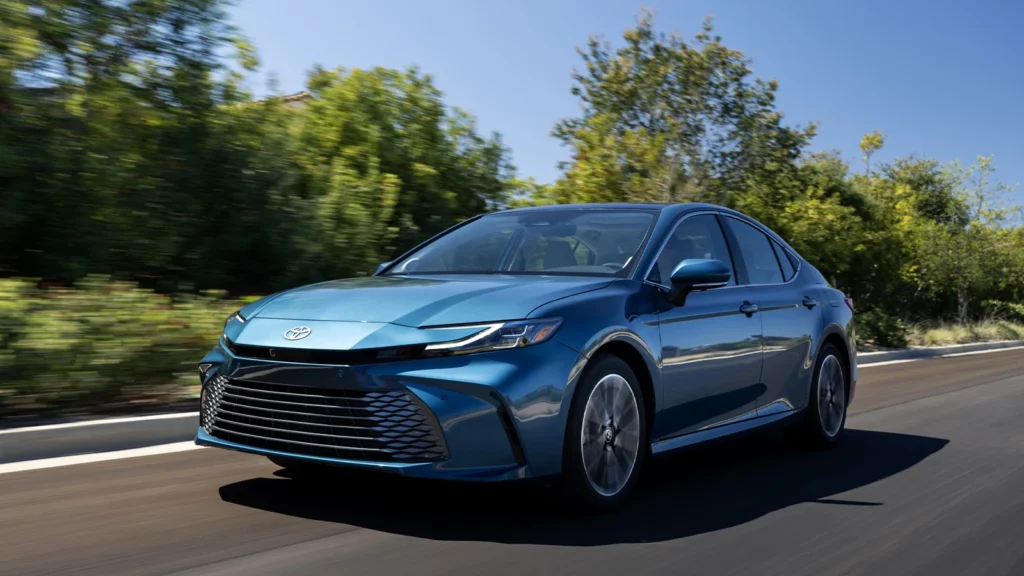
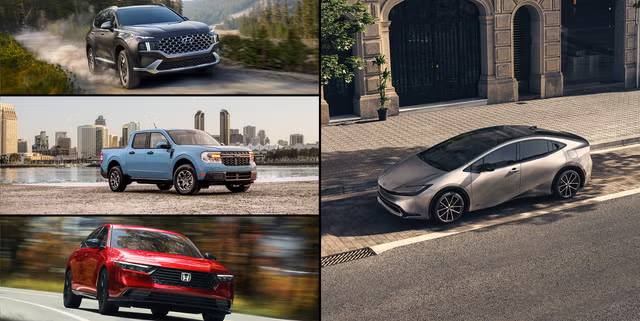
    Some of the top performing hybrid vehicles in a collage

    Hybrids have been on U.S. roads for over 2 decades and are known for their long-term durability. The Toyota Prius, for example, often runs past 200,000 miles with just routine care. Today, brands like Toyota, Honda, and Ford have refined hybrid systems so well that failure rates remain very low.

    • The gasoline engine handles most of the heavy lifting, so the smaller battery is less stressed compared to a full EV battery.
    • Hybrid batteries are air-cooled and built for longevity, and replacement costs have dropped significantly in the past decade (often $1,500–$3,000 today).
    • Consumer Reports consistently ranks hybrids like the Toyota Prius, Honda Accord Hybrid, and Lexus ES Hybrid among the most reliable vehicles overall.
    • Explore more on why Hybrids are the smart choice in SoCal.

    👉 For drivers who want peace of mind, hybrids are the most proven option with the lowest ownership risk.

    EVs: Simpler Mechanics

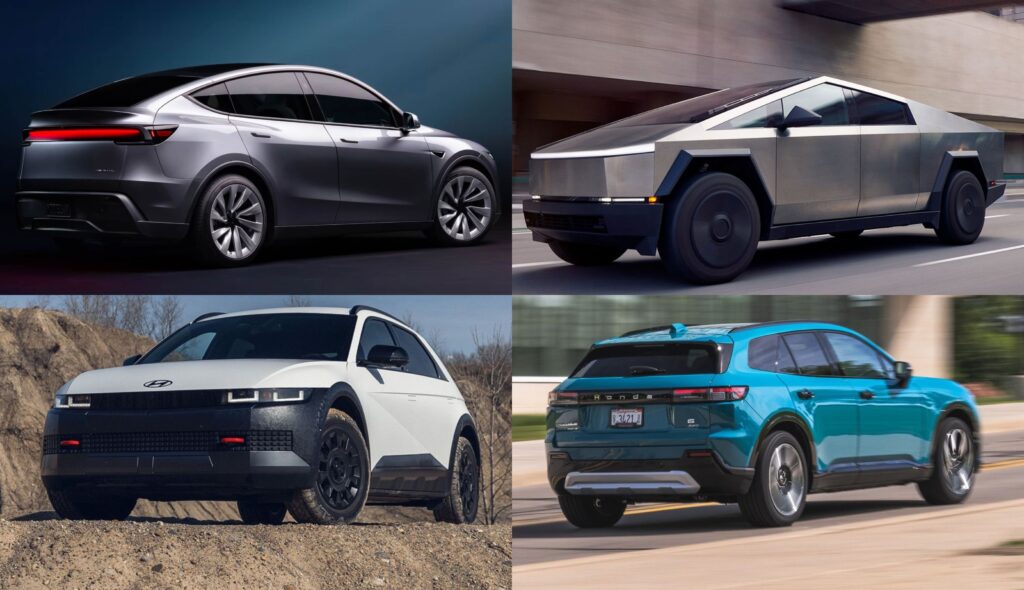
    Four of the top EVs in a collage

    EVs, in theory, should be more reliable because they have far fewer moving parts. There are no oil changes, timing belts, or exhaust systems, and regenerative braking means brake pads last longer. For many owners, that translates into lower maintenance costs year after year.

    However, because EVs are still relatively new, reliability studies show mixed results:

    • Early EVs like the Nissan Leaf and Chevy Bolt had more issues with battery degradation and recalls, especially around fast charging and thermal management.
    • Newer EVs (Tesla Model 3/Y, Hyundai Kona EV, Kia EV6, etc.) show better long-term battery performance, but may experience software glitches, touchscreen malfunctions, or problems with advanced driver assistance systems.
    • Repair costs can be higher due to specialized parts and limited availability of trained technicians, though routine upkeep is minimal compared to hybrids or gas cars.

    👉 If you can tolerate occasional tech hiccups, an EV will still save you money over time due to lower maintenance and fueling costs.

    PHEVs: Twice the Systems

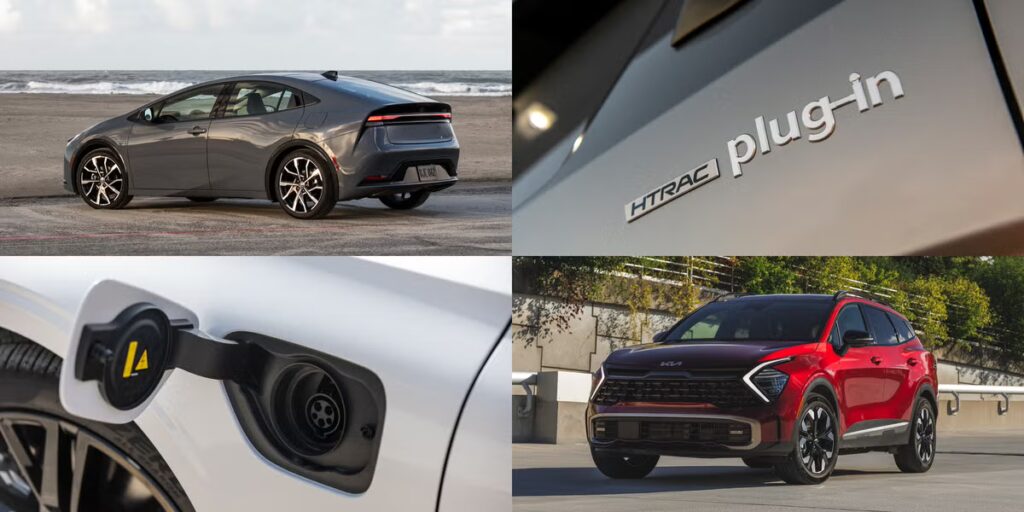
    Two PHEV vehicles and a close up images of a gas tank and name of trim

    Plug-in hybrids (PHEVs) combine a full hybrid system with a larger battery and plug-in charging capability. While they offer flexibility—electric miles for short trips and gas backup for longer ones—this dual nature can impact reliability.

    • Two drivetrains to maintain: a gas engine plus a larger EV system, meaning more parts that can fail.
    • Battery use is higher than a traditional hybrid, so range degradation over time is more noticeable.
    • Consumer surveys often rank PHEVs as less reliable than both hybrids and EVs because of this added complexity.

    👉 PHEVs can be a sweet spot if you want both gas and electric flexibility, but they typically come with the highest risk of repairs out of the three.

    Even with incentives, EVs and hybrids come with unique costs:

    • Annual EV Road Improvement Fee: About $100/year on EV registrations in CA.
    • Insurance: EVs can carry higher premiums (due to parts/repair costs) , while hybrids usually cost about the same as gas vehicles.
    • Fuel vs. Charging:
      • Home charging = ~$0.15–$0.25 per kWh (often cheaper with time-of-use rates). That’s the equivalent of paying $1–$1.50 per gallon.
      • Gas in SoCal = often $5–$6 per gallon. Hybrids mitigate this but can’t compete with home-charged EV costs.
      • Hybrids improve MPG significantly, but EVs still win on fuel cost if home charging is available.

    Think about your lifestyle before deciding:

    Used Hybrid: 🚙

    • Ideal for renters without home chargers.
    • Simple, reliable, and less expensive to maintain.
    • 40–55+ MPG in LA traffic saves hundreds monthly.

    🚨 Browse our inventory of 100+ hybrid vehicles.

    Used EV:

    • Perfect if you own a home or have charging access.
    • Lowest operating costs (fuel + maintenance).
    • Best option for budget-savvy buyers who take advantage of rebates + depreciation discounts.

    🚨 Shop our EV lineup and choose from more than 20 vehicles.

    Used PHEV: 🔌

    • Great compromise: electric miles for local errands + gas backup for road trips.
    • Best if you can charge at home but still want flexibility.
    • Just note: less reliable than hybrids, but more flexible than EVs.

    🚨 View our PHEV inventory of 20+ vehicles.

    Southern California offers the perfect environment for both hybrids and EVs. If you live in an apartment or rent without charging access, hybrids will save you the most headaches. But if you own a home or have consistent charging access, a used EV will outperform a hybrid in cost savings, especially with today’s rebates, steep depreciation, and California’s supportive policies.

    👉 Either way, you’ll save money compared to a traditional gas car—and contribute to cleaner air in one of the country’s most congested regions.

  • Top 5 Used Cars for Uber and Lyft Drivers

    top 5 used cars for uber and lyft drivers

    Driving for Uber or Lyft in California is more than just having a car—it’s about choosing the right car at the right place. Gas prices are among the highest in the country, traffic congestion is a daily reality, and passengers expect a safe, comfortable ride. That’s why smart rideshare drivers across the Golden State invest in reliable, fuel-efficient used cars that go the distance without draining their wallets.

    Let’s take a closer look at the top used cars that check all the boxes for Uber and Lyft drivers operating in the Golden State.

    Before diving into specific models, here are the key qualities to prioritize:

    Fuel Efficiency – California gas prices aren’t cheap. The more MPG, the more money stays in your pocket.
    Interior Space – Especially for UberX and Uber Comfort, legroom and trunk space matter.
    Reliability – You can’t make money if your car is always in the shop.
    Low Maintenance Costs – Parts and labor should be affordable and easy to find.
    Rideshare Approval – Uber and Lyft have year and condition requirements. Typically, cars must be 15 years old or newer (Uber) or meet state-specific rules.
    Technology Features – Backup camera, Bluetooth, and smartphone connectivity boost both safety and ratings.

    Now, let’s explore the best used cars that check all these boxes.

    MORE: Reasons Why Hybrids are the Top Choices

    A Pioneer in Hybrid Technology

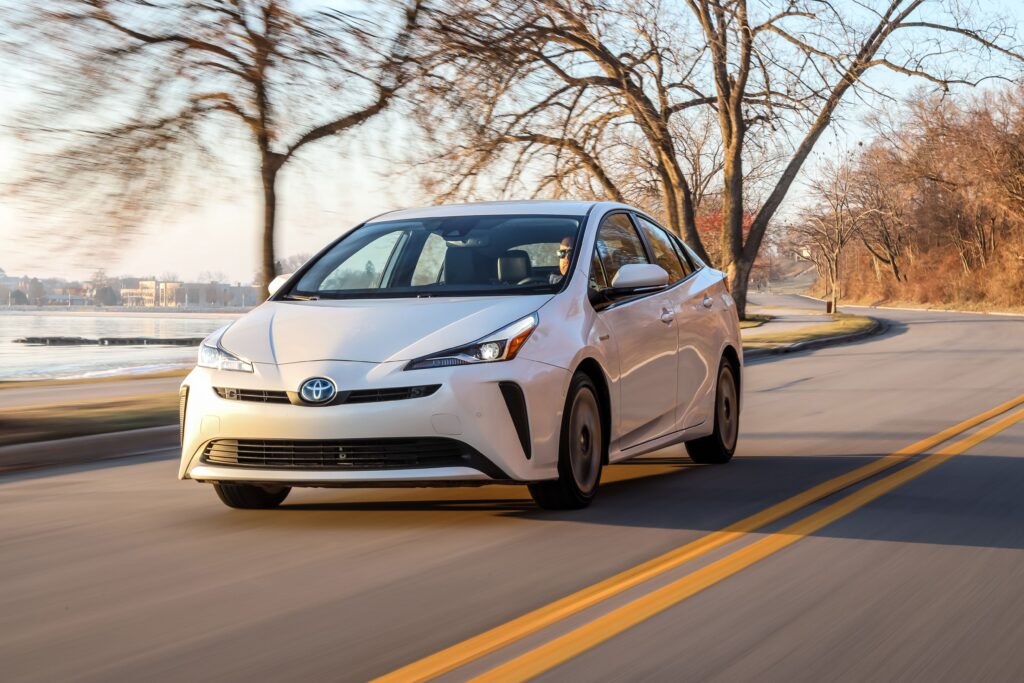
    white 2020 toyota prius driving on a road

    The Toyota Prius is a household name for one reason: it changed how people think about fuel efficiency. This compact hatchback features a hybrid-electric powertrain that delivers exceptional gas mileage without sacrificing interior space. The Prius boasts a quiet cabin, smooth ride, and tech-forward design with standard features like push-button start, backup camera, and Bluetooth.

    Key Features:

    • Fuel Economy: ~50 mpg city / 48 mpg highway
    • Powertrain: 1.8L 4-cylinder hybrid engine
    • Interior: Surprisingly roomy for a compact, with 27 cu ft of cargo space
    • Reliability: One of the most dependable hybrids on the market

    ✅ Why It’s Great for Uber & Lyft

    • Outstanding fuel savings—ideal for long daily driving
    • Low maintenance costs = more money in your pocket
    • Ample trunk space for luggage, groceries, or delivery orders
    • Eligible for California’s HOV lane with proper decals
    • High resale value

    💵 Estimated Used Price (CA): $10,000–$18,000 (2015–2019 models)

    A Refined Hybrid With a Premium Feel

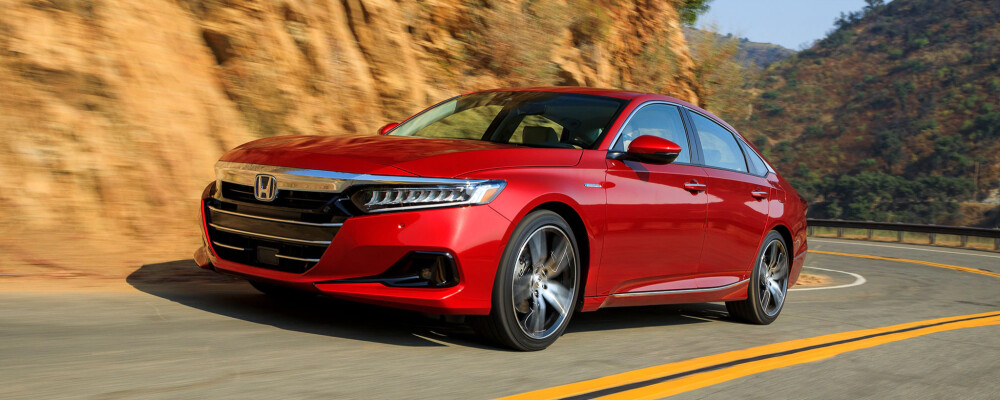
    red 2021 honda accord hybrid on mountain road

    The Honda Accord Hybrid blends everything drivers love about the Accord—roominess, comfort, and excellent handling—with the fuel savings of a hybrid. The interior is spacious and upscale, often featuring leather seats, dual-zone climate control, and a large touchscreen interface. Passengers enjoy generous rear legroom, while drivers appreciate the smooth, quiet powertrain.

    Key Features:

    • Fuel Economy: ~48 mpg city / 47 highway
    • Powertrain: 2.0L 4-cylinder hybrid
    • Interior: High-end materials, tech-rich dashboard, quiet cabin
    • Cargo: 16.7 cu ft trunk, among the largest in its class

    ✅ Why It’s Great for Uber & Lyft

    • Roomy and refined enough for Uber Comfort tier
    • Quiet ride ideal for longer airport or interstate trips
    • High fuel efficiency with the upscale feel of a near-luxury sedan
    • Maintains high resale value for long-term investment

    💵 Estimated Used Price (CA): $20,000–$28,000 (2017–2020 models)

    MORE: Explore More Vehicles with High Resale Value

    Timeless Reliability Meets Modern Hybrid Efficiency

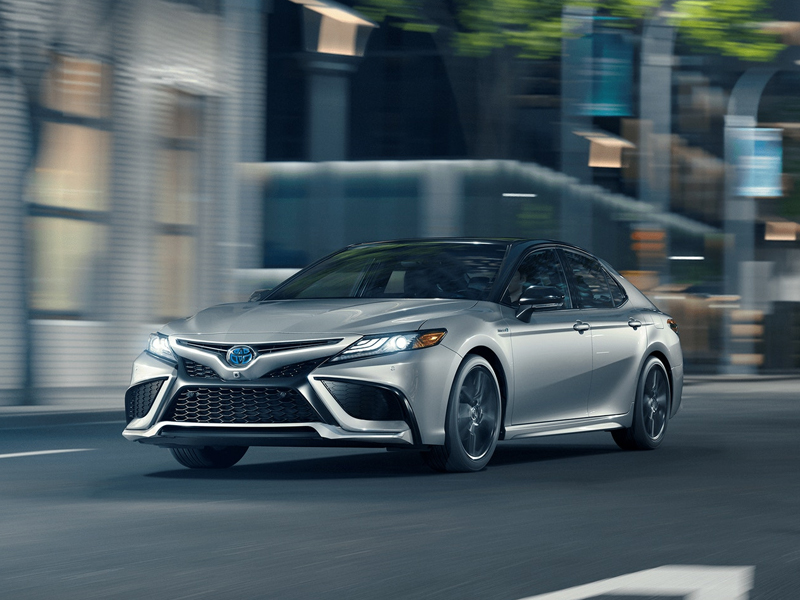
    grey 2021 toyota camry hybrid driving on road at night

    The Toyota Camry Hybrid offers everything drivers have come to expect from the Camry—bulletproof dependability, easy maintenance, and a smooth ride—while adding hybrid fuel efficiency. It’s a midsize sedan that punches above its class in both value and comfort, with a quiet cabin and advanced safety features like adaptive cruise control and lane departure alert.

    Key Features:

    • Fuel Economy: ~44–46 mpg combined
    • Powertrain: 2.5L hybrid 4-cylinder
    • Interior: Supportive seats, user-friendly infotainment, quality finishes
    • Safety: Toyota Safety Sense standard on 2018+ models

    ✅ Why It’s Great for Uber & Lyft

    • A familiar, trusted brand that reassures passengers
    • Smooth ride and quiet interior boost rider satisfaction
    • Excellent MPG, especially for a non-compact sedan
    • Easy to maintain with widely available parts

    💵 Estimated Used Price (CA): $14,000–$24,000 (2016–2019 models)

    Value-Packed and Stylish

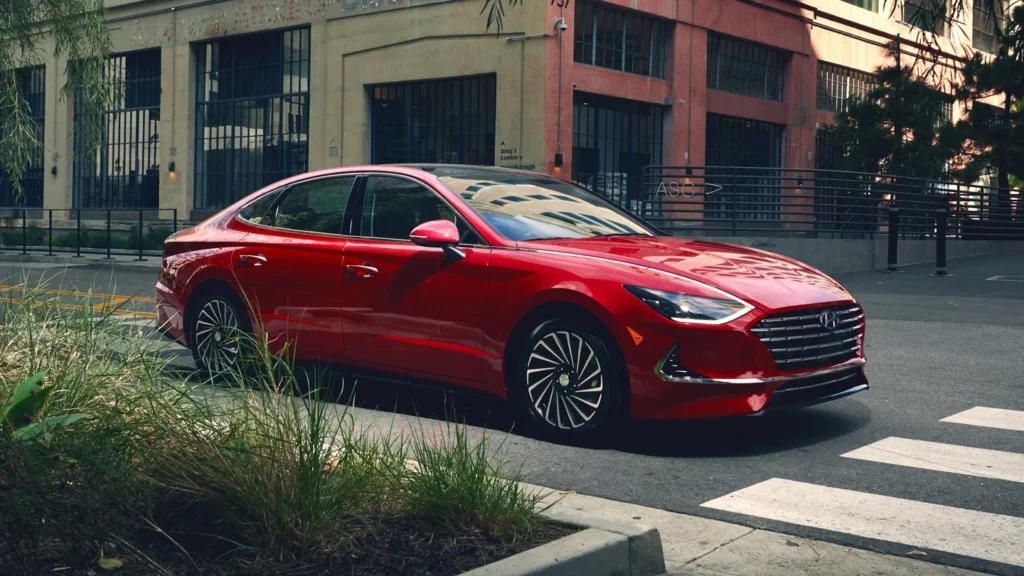
    a parked red 2020 hyundai sonata hybrid

    The Hyundai Sonata Hybrid stands out for offering a premium look and feel without the premium price. It features a sleek design, a spacious interior, and user-friendly tech like Apple CarPlay, Android Auto, and touchscreen displays. Higher trims often include heated seats, panoramic sunroof, and driver assistance systems—rare in this price segment.

    Key Features:

    • Fuel Economy: ~47 mpg combined
    • Powertrain: 2.0L hybrid engine
    • Design: Clean, modern lines with a luxury feel
    • Technology: Some trims offer lane keep assist, blind spot monitoring

    ✅ Why It’s Great for Uber & Lyft

    • Lower purchase price with high-end amenities
    • Tech-savvy cabin keeps both drivers and riders happy
    • High fuel economy with great ride comfort
    • Still under warranty if under 100,000 miles (Hyundai’s 10-year powertrain coverage)

    💵 Estimated Used Price (CA): $14,000–$22,000 (2017–2019 models)

    A Crossover Built for Urban Efficiency

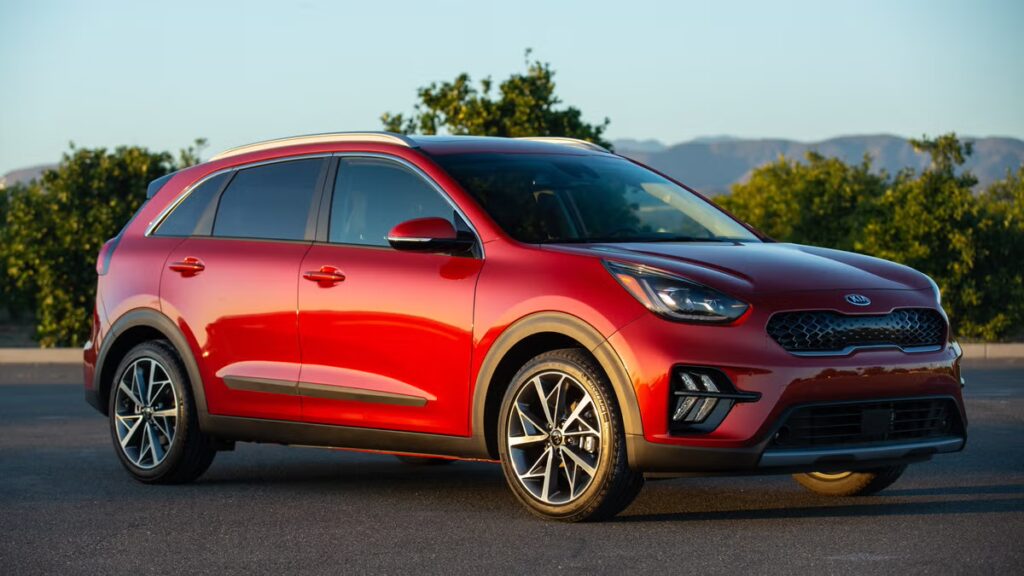
    red 2021 kia niro hybrid

    The Kia Niro Hybrid offers the body and visibility of a small SUV with the fuel economy of a compact hybrid. It features a spacious interior, elevated driving position, and a flat cargo floor—making it versatile for both passengers and packages. Its unique crossover-hatchback profile makes it feel roomier than a sedan without sacrificing MPG.

    Key Features:

    • Fuel Economy: ~50 mpg combined
    • Powertrain: 1.6L hybrid 4-cylinder
    • Interior: Roomy with SUV feel, up to 54.5 cu ft with seats folded
    • Technology: Standard Apple CarPlay/Android Auto

    ✅ Why It’s Great for Uber & Lyft

    • Great for drivers needing more cargo space or taller seating
    • Fantastic fuel economy for a crossover
    • Easier to enter/exit—perfect for elderly or frequent riders
    • Potential HOV lane access (if not previously registered)

    💵 Estimated Used Price (CA): $15,000–$24,000 (2017–2020 models)

    Here are some tips to help you choose the right used car:

    • Get a pre-purchase inspection – Even from dealers
    • Check rideshare eligibility – Uber & Lyft vehicle requirements vary by city
    • Target newer models (2016 or newer) – For features and eligibility
    • Keep maintenance records – Uber and Lyft require documentation
    • Check for accident history – Clean Carfax is a plus
    • Think local – Consider traffic, terrain, and commute length in your area (e.g., LA freeways vs. SF hills)

    MORE: Extra Buying Tips on Used Vehicles

    The best used car for Uber or Lyft in California isn’t just about price—it’s about maximizing your time on the road. Prioritize fuel efficiency, comfort, and long-term reliability, and you’ll earn more with fewer headaches.

    If you’re shopping for a used rideshare vehicle in California, start with the models above. Each brings real-world value, high ratings from drivers, and proven results on the road.

    MORE: Have any questions or inquiries? Contact us!